+91 83742 09209
 konakalla.vamsi99@gmail.com
 [Clinic Address, City]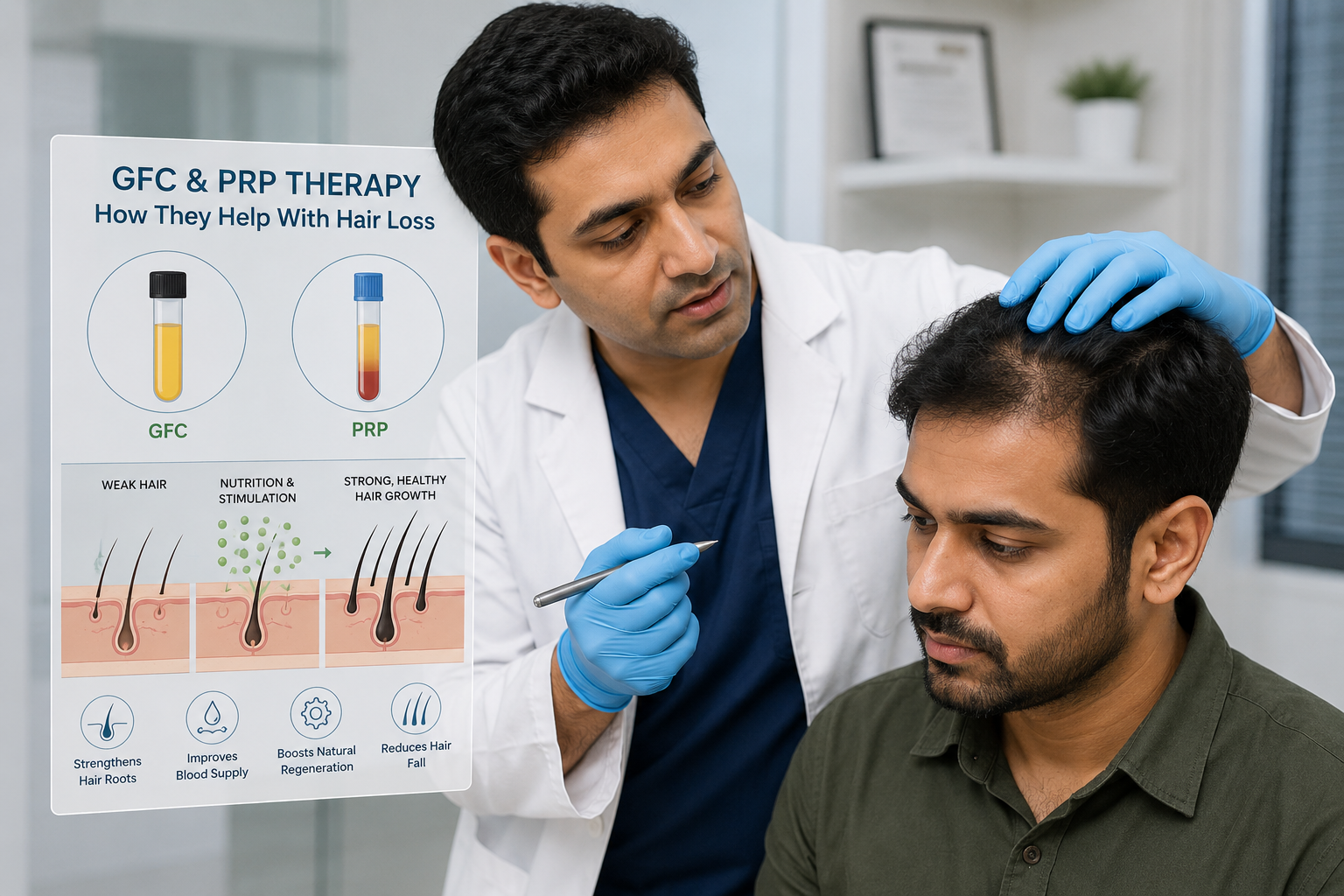
If you are experiencing early hair thinning or want to support your hair health after a transplant, you may have come across PRP (Platelet-Rich Plasma) and GFC (Growth Factor Concentrate) therapies. Both are advanced, minimally invasive treatments that use your own blood to promote natural hair growth. However, they differ in how they are prepared and administered, affecting consistency and patient experience.
PRP is the traditional method. A small sample of blood is drawn, spun in a centrifuge to separate the platelets, and the platelet-rich plasma is injected into the scalp. Once in the scalp, these platelets naturally release growth factors that stimulate inactive follicles, improve blood supply to the roots, and strengthen existing hair shafts.
GFC represents the next evolution of PRP. By activating platelets in the laboratory tube before centrifuge, GFC extracts only pure growth factors, eliminating red and white blood cells for a more concentrated, less painful injection.
Because GFC contains only active growth factors and no blood cells, the preparation is highly stable and uniform. Patients often report less swelling and pain during and after GFC sessions compared to standard PRP. It is an excellent option for patients seeking a highly concentrated therapy with minimal discomfort.
Comparing GFC and PRP: Which is right for you?
Both therapies offer notable benefits, but they are typically selected based on individual scalp conditions, stage of hair fall, and preference. Key differences include:
- Concentration: GFC delivers a pre-activated, concentrated dose of growth factors, whereas PRP relies on activation inside the scalp.
- Discomfort: GFC injections are generally smoother and result in less post-procedure pain and swelling.
- Number of Sessions: GFC may require fewer sessions to achieve visible improvement in density and reduction in hair fall.
- Suitability: Both can be used stand-alone or combined with minoxidil, finasteride, or post-transplant recovery protocols.
Ultimately, the choice between GFC and PRP depends on your specific pattern of hair loss and clinical recommendations. A professional consultation is key to determining the best schedule and protocol to help restore your hair density. This content is for general information and is not medical advice.
 Call Us :